
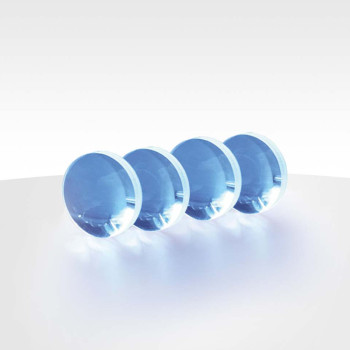
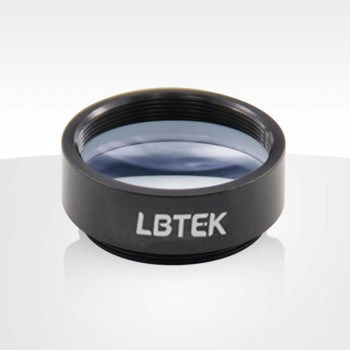
Plano-Convex Lens, UVFS, AR Coating: 245 – 400nm
LBTEK plano-convex lenses are made of UV fused silica, which offers better homogeneity and a lower thermal expansion coefficient compared to N-BK7 glass, making them especially suitable for ultraviolet and near-infrared applications. With a positive focal length, LBTEK plano-convex lenses are commonly used for imaging and beam collimation. LBTEK offers both unmounted and mounted plano-convex lenses for the 245–400 nm wavelength range, with available diameters of 12.7 mm, 25.4 mm, and 50.8 mm. The mounted versions are pre-installed in standard lens tubes, with the product model, type, diameter, and focal length engraved on the tube surface for quick and convenient identification.
Plano-Convex Lens, UVFS, AR Coating: 400 – 700nm
LBTEK plano-convex lenses are made of UV fused silica, which provides better homogeneity and a lower thermal expansion coefficient compared to N-BK7 glass, making them particularly suitable for ultraviolet and near-infrared applications. With a positive focal length, LBTEK plano-convex lenses are widely used for imaging and beam collimation. LBTEK offers both unmounted and mounted plano-convex lenses for the 400–700 nm wavelength range, with available diameters of 12.7 mm, 25.4 mm, and 50.8 mm. The mounted versions come pre-installed in standard lens tubes, with the product model, type, diameter, and focal length engraved on the tube surface for quick and convenient identification.
Plano-Convex Lens, N-BK7 , AR Coating: 400 – 700nm
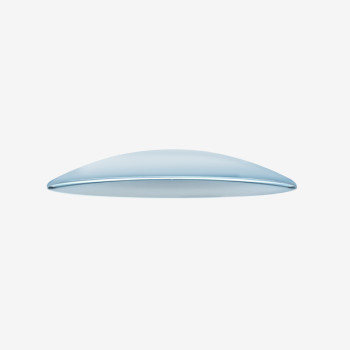
A plano-convex lens has one flat surface and one convex surface, providing a positive focal length. It is typically used for beam reduction, shortening focal length, or image magnification. To minimize spherical aberration, the plano-convex lens should be oriented with the curved surface facing the collimated beam when focusing, and with the flat surface facing the point source when collimating. LBTEK manufactures a variety of lenses using N-BK7, the most common optical glass material, widely applied in the visible and near-infrared spectral ranges.
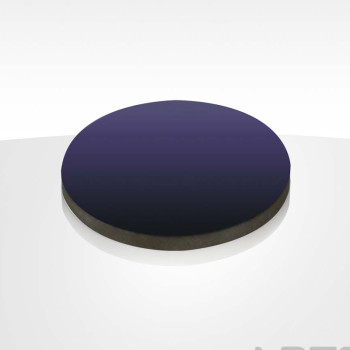
Plano-Convex Lens, UVFS, AR Coating: 700 – 1100nm
LBTEK Plano-Convex Lenses are made from UV fused silica, offering better homogeneity and a lower thermal expansion coefficient compared to N-BK7 glass, making them well-suited for use in the UV and near-infrared spectral ranges. LBTEK plano-convex lenses feature positive focal lengths and are commonly used for imaging or beam collimation applications. LBTEK provides both unmounted and mounted plano-convex lenses for operation in the 700–1100 nm wavelength range, with element diameters available in 12.7 mm, 25.4 mm, and 50.8 mm. The mounted versions are pre-installed in standard lens tubes, with the tube surfaces engraved with the product model, type, diameter, and focal length, allowing users to quickly identify lens specifications.
Plano-Convex Lens, N-BK7, AR Coating: 700 – 1100nm
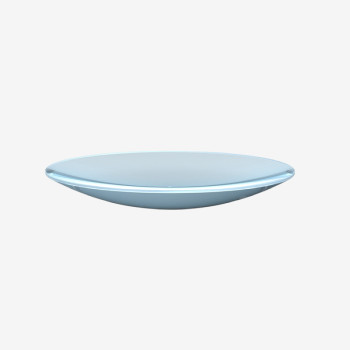
A plano-convex lens has one convex surface and one flat surface, with a positive focal length. Both surfaces are coated with an anti-reflection (AR) coating for 700–1100 nm to minimize reflectance within this wavelength range. These lenses are typically used to reduce beam size, decrease focal length, or magnify images. To minimize spherical aberration, the plano-convex lens should be oriented so that the curved surface faces the incoming collimated beam when focusing, while the flat surface should face the point source when collimating. LBTEK offers a variety of lenses made from N-BK7, the most common lens material, widely used in the visible and near-infrared spectral regions.
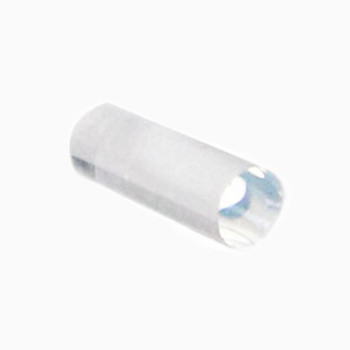
Gradient Index Lens
LBTEK gradient index (GRIN) lenses are cylindrical optical lenses that change the direction of light propagation through a gradual variation of refractive index within the lens. The refractive index of the GRIN material decreases radially from the center outward, enabling focusing, collimation, or imaging. Since both focusing and collimation occur at the lens end face, GRIN lenses can be tightly coupled to optical components without an air gap, reducing processing complexity. LBTEK GRIN lenses have a diameter of 1.8 mm and are available in multiple working wavelength options. Based on their operating principle, GRIN lenses are widely used in fiber optic applications.
Reviews
There are no reviews yet.