Pentagram

Homogenizing DOE (Diffractive Optical Element) products use diffractive optics and spatial light modulation principles to shape and uniformly distribute laser energy, converting Gaussian beams into flat-top profiles such as square, rectangular, circular, or line shapes. Compared to traditional refractive homogenizers, they offer a compact planar structure, high diffraction efficiency, excellent beam uniformity, and superior energy utilization, with flexible customization in wavelength, beam shape, and output size.

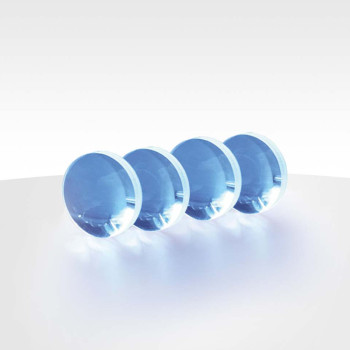
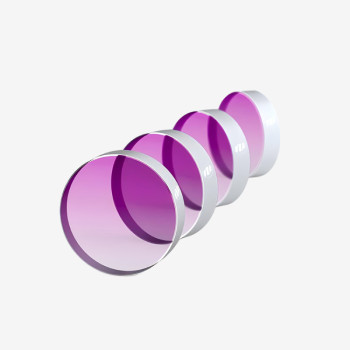
  • Polymer Homogenizing DOE
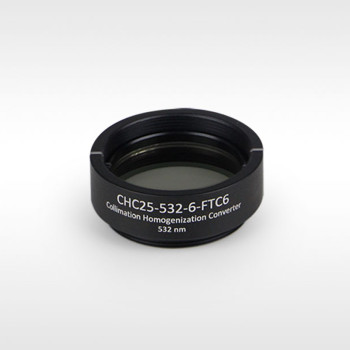
  • Collimation and Homogenization Converter

Download Brochure

- +

Polymer Homogenizing DOE

  • The fast-axis orientation of liquid crystal molecules is engineered according to the optical design, providing λ/2 phase retardation.
  • Capable of generating square, circular, and line-shaped flat-top beam profiles.
  • High diffraction efficiency, excellent uniformity, high damage threshold, and sharp beam edges.
  • Customizable beam shapes and output sizes.
  • Operating Wavelengths: 532 nm and 1064 nm
  • Output Beam Profiles: Square, Round, and Line

Collimation and Homogenization Converter

  • Material Structure: Liquid Crystal Polymer / N-BK7 Window / Linear Polarizer Film (three-plate flat structure with mechanical housing)
  • High beam uniformity with long propagation distance
  • Low sensitivity to incident beam polarization
  • Generates flat-top beams using spatial light attenuation principles
  • Operating Wavelengths: 532 nm, 633 nm
  • Available Incident Beam Diameters: 2 mm, 4 mm, 6 mm
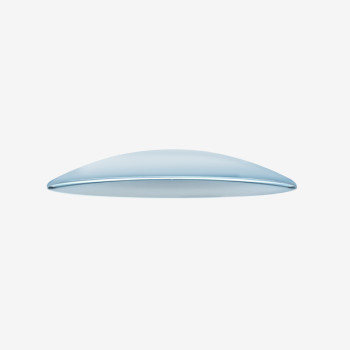
Specifications

Parameter Polymer Homogenizing DOE Collimation & Homogenization Converter
Product Type Diffractive Optical Element (DOE) Spatial Attenuation Beam Homogenizer
Working Principle Geometric phase modulation (DOE) Local spatial light attenuation
Optical Structure LCP film between N-BK7 or UVFS windows LCP + N-BK7 window + linear polarizer (three-plate structure)
Beam Input Type Gaussian beam (TEM00, M² < 1.3) Collimated laser beam
Output Beam Profile Square / circular / line flat-top Flat-top (long-distance propagation)
Uniformity High High
Edge Quality Sharp flat-top edges Smooth uniform profile
Diffraction / Shaping Efficiency High diffraction efficiency Attenuation-based shaping (high uniformity output)
Polarization Sensitivity Design-dependent Low sensitivity
Operating Wavelengths 532 nm, 1064 nm 532 nm, 633 nm
Substrate / Materials N-BK7 or UV fused silica (UVFS); LCP film N-BK7 window; LCP; linear polarizer film
Phase Retardation λ/2 (engineered LCP fast-axis orientation) Not phase-based (attenuation method)
Incident Beam Diameter 6 mm, 7 mm 2 mm, 4 mm, 6 mm
Output Beam Diameter Typical options (µm): 30.3×30.3, 50×50, 75.8×75.8, 80×80, 200×200, 250, 1000
(Customizable)
2 mm, 4 mm, 6 mm
Form Factor Planar flat optical element 25.4 mm × 3.0 mm plate (in mechanical housing)
Mounting Custom optical integration Standard SM1 lens tube compatible
Damage Threshold High (laser-grade materials) Suitable for laser illumination / imaging setups
Propagation Distance Near to mid-field beam shaping Optimized for long-distance flat-top output
Customization Wavelength, beam shape, beam size, phase design Wavelength and beam diameter options
Typical Applications Laser processing, micromachining, biomedical optics, scientific research Imaging, uniform illumination, optical measurement, long-distance laser processing
Brand LBTEK LBTEK

Reviews

There are no reviews yet.

Be the first to review “Beam Homogenizing DOE”

Your email address will not be published. Required fields are marked *

You may also like…